About riding Cabarete
Kite Beach is the western end of Cabarete bay on the Dominican Republic's north coast, and the kite capital of the Caribbean: six-plus schools on the sand, a generation of Dominican pro riders raised here, and the Master of the Ocean contested out front since 2003. The trades blow most of the year and the bay sorts them: flat water inside the reef, waves on the reef, open ocean beyond.
The winds, by name
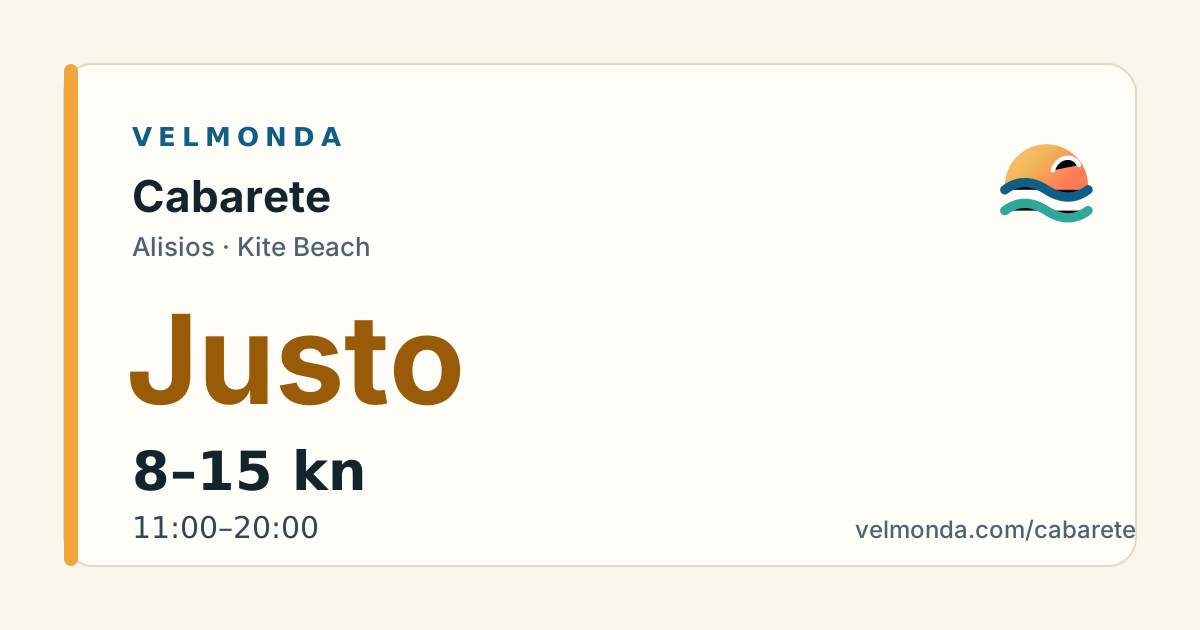
Alisios (the trades). One wind with two engines: the easterly trade, driven by the Azores-Bermuda high, and the thermal breeze the island switches on as it heats through the afternoon. That gives the day a clock: glass in the morning, filling in around 13:00, peaking near 16:00 at 18–25 kn in summer, and easing with the sun. June to August is the strongest stretch (20–30 kn); December to March brings a solid winter of trades; September and October are the lightest months.
When to come
A year-round spot with two peaks: June to August, when the thermal stacks on the trade, and mid-December to March on the winter trades. The local guides agree September and October are the weak months; Cabarete Kite Point says it plainly: if you are flying out specifically to kite, avoid them. The water runs 26 to 29 degrees all year.
What to watch
The shallow reef about 300 m out holds sea urchins and fire coral, and in winter it stands up mast-high waves: booties near the reef and careful feet when landing. The beach is small and very busy, with lessons everywhere; do not ride in front of the schools, and in July and August erosion narrows it further. If you cannot hold upwind you end up at Bozo Beach and walk back: annoying, not dangerous.
Getting there
Kite Beach sits about 2 km west of Cabarete town and half an hour from Puerto Plata airport (POP); the schools on the beach handle lessons, rental and gear storage.