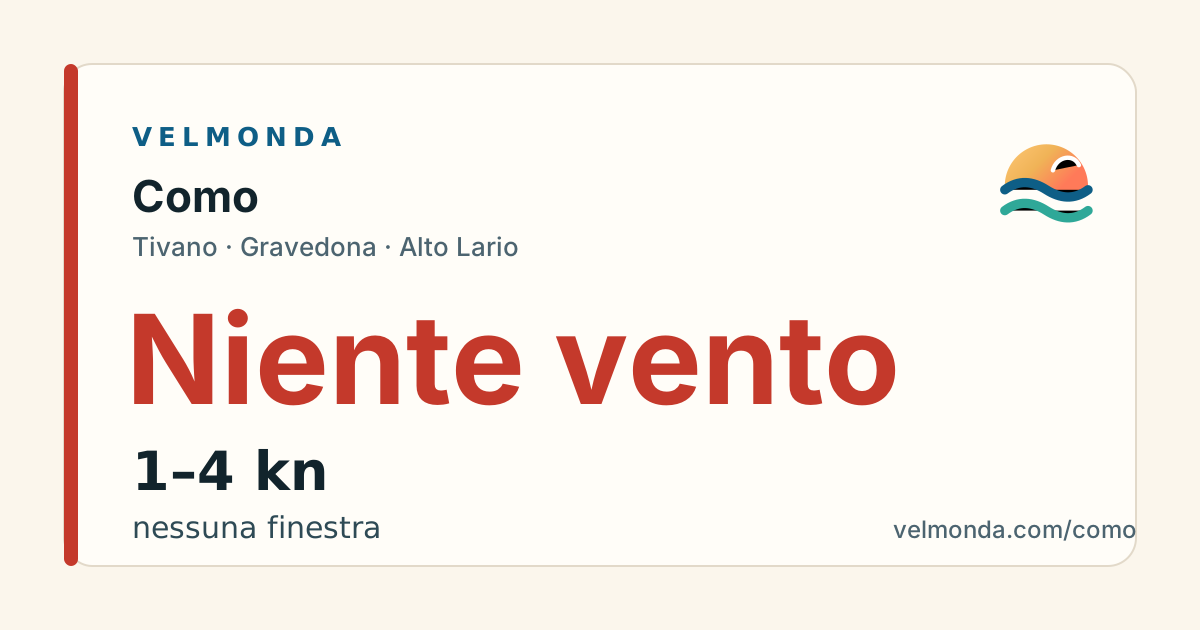
About riding Como
Como here means the Alto Lario: Gravedona and Domaso at the top of the lake, where the Valtellina and Valchiavenna valleys open the doors to the wind. The basin runs on a textbook lake-valley circulation (the dawn Tivano from the north, the afternoon Breva from the south), and every day asks a single question: does it set up today? That is exactly the question the verdict above answers.
The winds, by name
Breva. The wind of the afternoon and of this whole page: the southerly thermal that runs up the lake as the plain heats. Under an anticyclone with clear sky it follows the Tivano's death in late morning, builds through early afternoon, peaks around 15:00–16:00 and dies toward sunset. At Domaso it comes in sideshore from the right.
Tivano. The overnight arm of the same machine: it drains down from the Valtellina in the early morning, most of the year, around 10 knots, and dies between 10:30 and 11:00. A clean Tivano under an anticyclone is the classic prelude to a Breva afternoon.
Ventone. The north wind out of the Valchiavenna, and the one to respect: it arrives suddenly, at any hour, in violent gusts with a strong vertical component; 108 km/h has been measured at Pian di Spagna. It is not a thermal: it is a different regime entirely, most frequent in spring and after Alpine bad weather.
When to come
The local spot guides put the reliable Breva season at spring through autumn; the Tivano runs most of the year. Winter in the northern basin belongs to the Ventone and the föhn family, with water around 7 °C. Out of season this lake is drysuit territory, not shorty territory.
What to watch
The Ventone arrives without warning, at any hour, and if thunderstorms build over the western ridges, the Breva can shift or die abruptly. Scheduled ferries and hydrofoils cross the basin: keep clear of the landing stages. After storms and in high water the lake carries half-submerged logs, and out of season the water is cold and deep: a swim without the right suit is a serious problem, not a dip.
Getting there
Enter the water via the campsites along Domaso's 2.5 km stony beach; in the middle section the best entries are at Camping Northwind and Camping Gardenia. At Gravedona the beach is the Serenella, toward Domaso.