About riding Tarifa
Los Lances is seven kilometres of white sand running from Tarifa town to the dunes, up to 200 metres deep, more rigging room than you will ever need. Two winds with opposite personalities blow here: the Levante, warm, gusty and off the land, and the Poniente, Atlantic, even and cross-onshore; between them the local guides count rideable wind in every month of the year.
The winds, by name
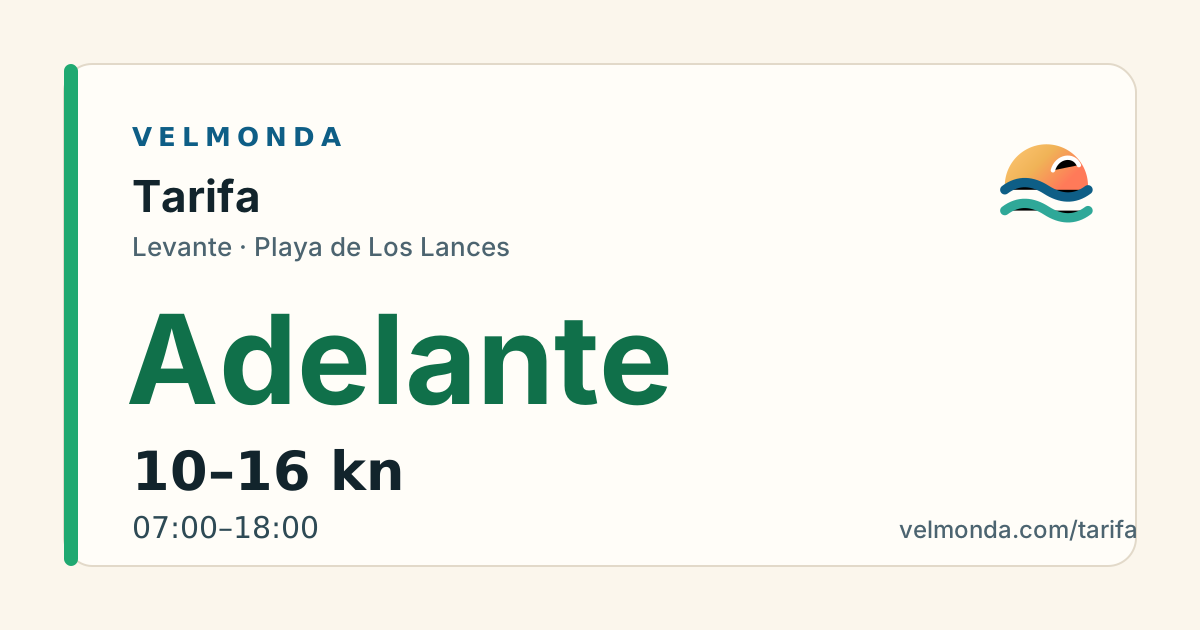
Levante. The funnel wind of the Strait: high pressure over the Mediterranean against low over the Atlantic, accelerated between the Rif and the Andalusian sierras. Warm, dry and gusty because it rolls down over the natural-park hills, and here it blows off the land: the further out you get, the more it carries you toward the Strait.
Poniente. The same gradient reversed, arriving off open Atlantic water: cooler, steadier, cross-onshore and with some wave. On summer afternoons the thermal tops it up. The best wind to learn on.
Vendaval. The south-westerly gale of autumn and winter Atlantic fronts: squalls, violent gusts and heavy seas: days that suspend even the Tangier ferry. Treat it with respect.
When to come
Summer belongs to the Levante: hot, strong, gusty, with the beach zoned and packed. Spring and autumn give wind without the crowds; winter runs on Poniente and Vendaval in thicker rubber; the Atlantic water bottoms out around 15 °C in February and tops out around 21 °C in August.
What to watch
The Río Jara mouth runs extremely dangerous currents, worst on a draining tide: stay off it. On Levante the wind blows off the land and behind you is the Strait and its shipping traffic: gear failure means drift, so ride with others. The Los Lances lagoon is a protected natural area, closed to all water sports, with real fines.
Getting there
The beach starts at Tarifa town itself and runs northwest. In summer (15 June to 15 September) you launch at Los Lances North only, north of the Río Jara by the campsite strip; the rest of the year, the whole beach.